
By ABIGAIL SMITH
Triangle Contributor
Drs. James Hall and Ed Mills, two renowned science professors who have more than 80 years of teaching at Wingate between them, will be retiring at the end of this semester, having left an indelible impact on the university’s Chemistry and Biology programs, respectively.

Chemistry professor Hall created the university’s Chemistry major and spent 44 years teaching at Wingate. Hall has made significant contributions to Wingate University over his many years here, starting with creating the chemistry major in 1984, and developing 12 classes for the major. He wanted to ensure that Chemistry majors at Wingate received the necessary experience and knowledge to help them in the field after graduating.
Some courses Hall has created that are more unique to Wingate’s Chemistry Department are business classes where he teaches students how to handle the business side of the chemistry world and how to make large quantities of materials. Another is a Hazardous Materials class, where he teaches students about the government regulations on materials. Hall said that because of these classes, students will be more experienced and have more opportunities open to them after college.
“They usually like our people because they have the training and experience that no one else does,” he said.
In addition to the major and classes, Hall has also developed 10 scholarships for multiple majors. He said that some of these scholarships he created in honor of colleagues that have passed away. The scholarships are for chemistry, biology, psychology and music fields.
When asked about what was most meaningful to him during his time as Wingate, he answered that he was thankful for the administration for allowing him to create the Chemistry major and helping him along the way with all of its additions.
“I’ve been doing what I’ve been dreaming of doing since seventh grade,” said Hall.
Hall said that one of the things he enjoyed most about his time at Wingate was seeing his students accomplish great things after graduating. He has three of his previous students working with him in the chemistry department. He is grateful for his colleagues and describes them as a family. He also mentioned the many presentations he’s done, 120, and the chemistry events he’s attended with students to show off Wingate University’s discoveries.
Coming up soon is a convention Hall will be attending along with three students with the American Chemistry Society. There he is going to present what Wingate’s Chemistry Department has been working on recently, finding the perfect mixture of water and salt to absorb radiation. Hall described how these findings could greatly reduce the damage to a town or city caused by radiation if there happened to be an accident.
In preparation for his retirement, Dr. Hall has been focusing on preparing his colleagues as well as a new Chemistry professor to carry on the Chemistry major once he has left Wingate. He plans to still work on projects in retirement.
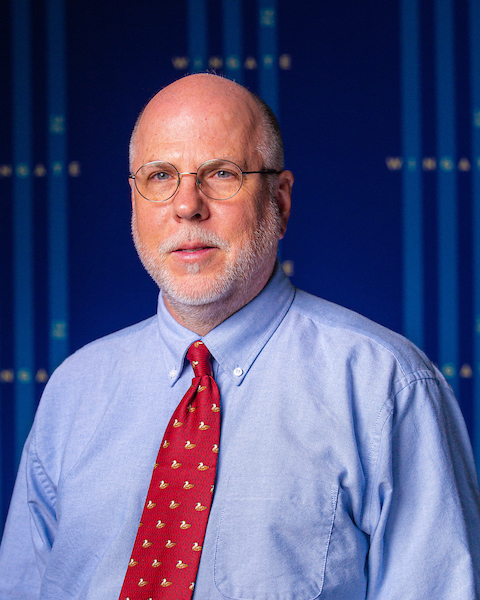
Biology professor Mills spent 37 years transforming Wingate’s Biology Department and expanding opportunities for students.
Mills came to Wingate in 1989. Since then he has worked to widen the scope of the biology department to include more students. He has created multiple classes for the Biology major and has been chair of the department twice. During this time, he has also created a substantial impact in research in ecology.
Mills recalls that when he first came to Wingate, the department was small, with only five faculty members. There were only a handful of students majoring in it, and the Biology major itself was geared towards medical students. Mills met many students who had a passion for the nature and wildlife side of biology, and responded by helping to develop the department to include a larger range of careers and callings.
“It was fun to be a part of the change from that first year and to help the university grow,” said Mills.
Some of the classes Mills created because of student feedback and evaluations included Marine Biology, Ornithology, and Wildlife Management. In 2000, the Environmental Biology major was created, and Mills describes this moment as being a whole new world for his students. The Biology Department has been growing ever since under Mills’ leadership, as the number of students majoring in the discipline has increased from 25 in Mills’ first year to 400 today.
During his time as chair of the department, Mills said he was mostly dealing with growth of the department. This included making sure there was enough faculty, diversifying the major, and reassessing curriculum to make sure it would make students as successful as possible.
Mills has done extensive research on birds, particularly how birds communicate with each other. He found that birds will communicate differently based on the presence of other noise, specifically human noise, around them. If there is too much man-made noise around an area, it can be hard for birds to communicate and therefore can have negative effects on their relationships with each other. He has presented these findings at many biology conventions with the help of his students.
Some of his favorite memories at Wingate are the field trips. Environmental Biology students would go to the Outer Banks of North Carolina to study wildlife there. He says his favorite part about his time at the university is the relationships with students and faculty.
“I’m thankful for the opportunity to teach—research comes second,” said Mills. “And getting to know students and watching them become successful. Making friends with faculty has been rewarding.”
He says he feels there are pros and cons about his retirement. He is excited for what the future may bring and plans to have an active retirement still doing things he loves, but will miss the students and his colleagues.
 Wingate Triangle