
By MATTHEW GALLO
Triangle contributing writer
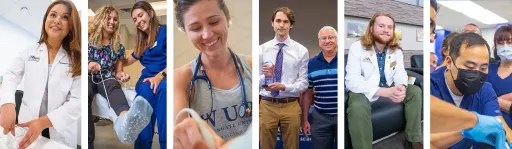
Wingate University’s healthcare programs are becoming increasingly designed to address imbalances in healthcare education across local communities through a hands-on philosophy that translates classroom knowledge into real-world impact. Through various data sources, the university identifies localized healthcare needs to inform program design.
“Before we develop any programs, we do an in-depth market analysis,” said Karen Friel, vice provost and dean of the Levine College of Health Sciences. “This includes job outlook and projected growth, job vacancies—which consists of the larger Charlotte metro area of 16 counties—salaries, campus capacity in terms of space and manpower and the competitive landscape: how close competing programs are, their size and their tuition.
“We also talk to community partners to assess need and to our community college partners, since those are important feeders into our health programs. Our enrollment team is often acutely aware of the majors students are seeking as well. Once we compile that data, senior management assesses whether it’s something we want to initiate and whether it’s where we want to put Wingate’s resources.”
Collaborations with those community organizations allow for clinical partnerships and initiatives that directly address local health disparities. For instance, Wingate offers physical therapy and pharmacy health screenings to Ground40, a faith-based program for men who have been recently incarcerated and are integrating back into society. The school also provides physical therapy services to Project658, which serves the refugee and immigrant community in Charlotte, and it offers pro-bono physical therapy and occupational services on campus for uninsured and underinsured residents.
Wingate’s Occupational Therapy program runs a free WoMB clinic that addresses pre- and post-partum conditions in women and babies, while the Physical Therapy and Occupational Therapy programs are combining to offer a free pelvic health clinic. The Social Work program operates the Wingate Service Station, which provides social work services to members of the campus community.
Outside of the Wingate community, the College of Health Sciences sponsors student initiatives to serve others thousands of miles away—such as working with Native Americans on a reservation in South Dakota and addressing Central American rural health needs in Belize and Honduras. All of these initiatives involve student participation with faculty oversight, which helps prepare students for clinical rotations and post-graduation careers.
“Hopefully, this instills in them a professional obligation to lift others,” said Friel, who revealed that the school will be adding pro-bono mental health counseling next year.
A recurring question that comes up, according to Friel, is how the university encourages graduates to remain and practice in rural or underserved areas after graduation.
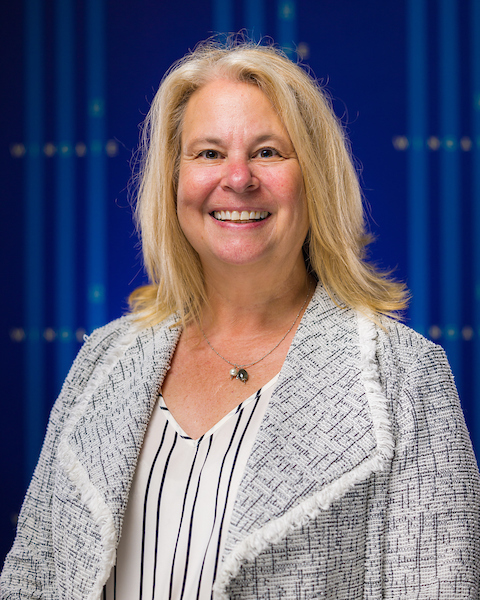
“The best way to get students interested in serving rural communities is through exposure and modeling,” said Dr. Shanta Dube, director of the Department of Public Health. “For example, this year, for the first time, the Levine College of Health Sciences is partnering with our Office of Global Engagement to offer a rural health international experience for undergraduate students in very rural areas of Peru and Mexico. This early exposure can help set them up for a lifetime of service.
“Our trips to South Dakota, Belize and Honduras—all involving students—highlight the importance of addressing health disparities and the lack of healthcare in impoverished regions. Although those experiences are mostly abroad, the intent is to prepare them to address those same concerns here at home.”
Maddie Cagnon, a May 2025 graduate of Wingate, expressed her excitement about her upcoming career opportunities and the valuable experiences she gained during her time at the university.
“In the summer of 2024, I completed an internship at a physical therapy clinic, working closely with two physical therapists,” said Cagnon. “Unlike previous observational experiences, this hands-on role allowed me to engage directly with patients and take an
active part in treatment sessions. Before starting, I set goals to apply my exercise science coursework, strengthen my communication and leadership skills and deepen my understanding of physical therapy.
“Throughout the internship, I guided patients through exercises, demonstrated proper techniques, and provided feedback. I also learned how to develop rehabilitation programs, read patient charts, and conduct evaluations. The therapists I worked with were dedicated mentors who exposed me to many aspects of the field. I even attended professional development clinics for new physical therapists, gaining insight into continued education in the profession. This internship affirmed my passion for physical therapy and equipped me with practical skills and experiences that extend beyond the classroom.”
As the demand for healthcare professionals continues to rise, the importance of hands-on, community-focused education has become more pronounced. According to the U.S. Bureau of Labor Statistics, employment in healthcare is projected to grow by 15% from 2019 to
2029, significantly faster than the average for all occupations. This surge underscores the need for educational institutions to prepare a workforce equipped with both theoretical knowledge and practical experience.
Many universities, like Wingate, are recognizing this trend and are adopting innovative models that prioritize experiential learning. Programs that combine classroom instruction with real-world clinical experiences are becoming increasingly common across the country.
Institutions such as the University of North Carolina at Chapel Hill and the University of Southern California have also implemented similar hands-on initiatives, focused on bridging the gap between education and practice while addressing local community needs.
Moreover, there is a strong national emphasis on addressing health disparities, particularly in underserved populations. Universities are aligning their curricula with the social determinants of health to empower students to tackle these issues effectively. By incorporating training that focuses on the unique challenges faced by marginalized
communities, educational programs are preparing future professionals not just to enter the workforce but to make a tangible impact in the areas that need it most.
Wingate’s College of Health Sciences is part a broader movement within the sector aimed at cultivating a more skilled, compassionate and community-oriented healthcare workforce.
 Wingate Triangle