
By Simon Dubravik
Triangle Contributing Writer
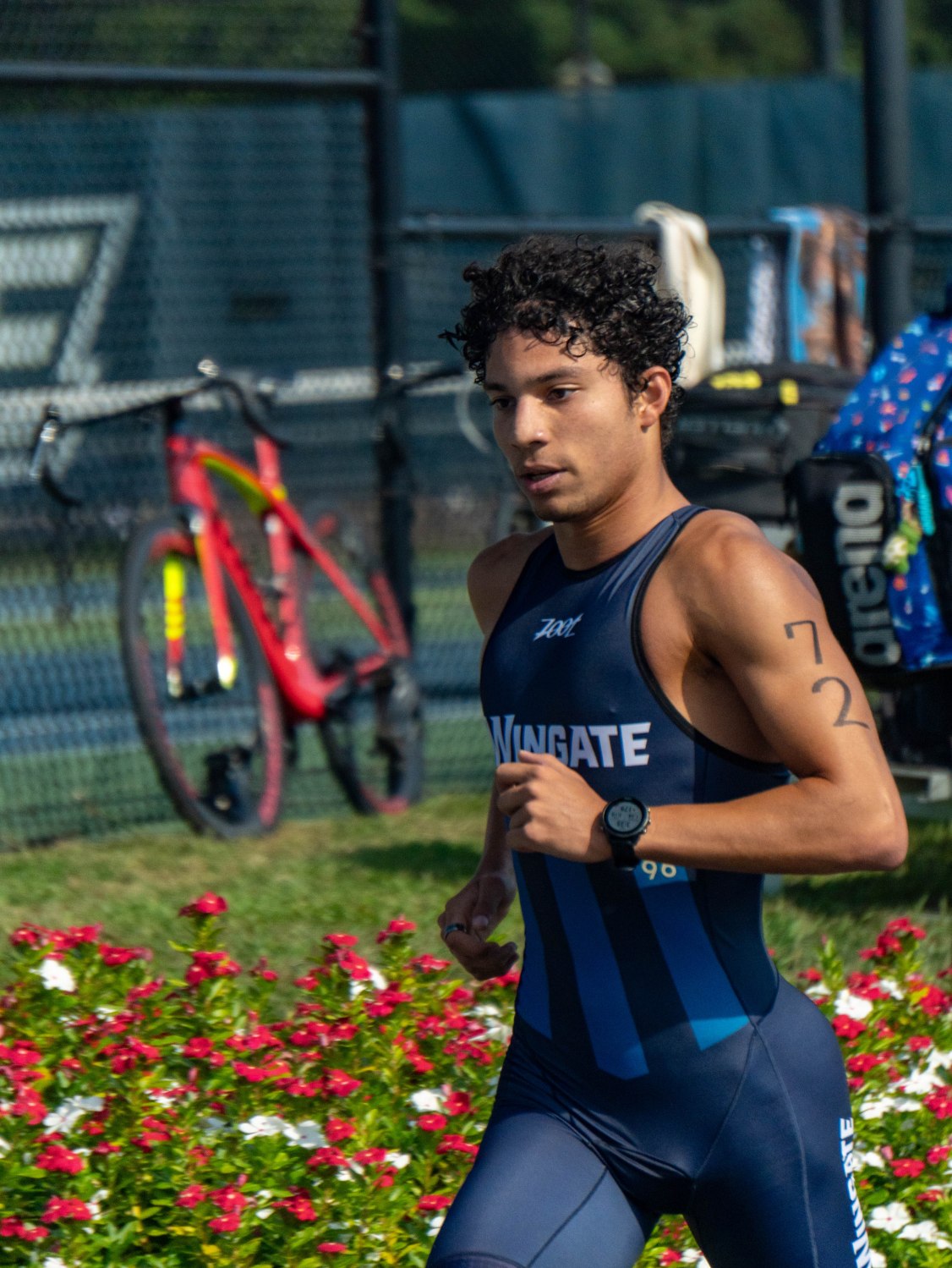
When a bacterial infection spread into his brain in April of last year, Wingate University student-athlete Alexis Vasquez underwent an emergency surgery that saved his life, but left him more than $25,000 in debt due to medical bills.
After two trips to the Student Health Center led to one diagnosis of TMJ and another for the flu, he continued to struggle and was eventually sent to the Atrium Health Carolinas Medical Center in Charlotte, where it was discovered that he had a rare bacterial infection of the brain. Doctors then rushed him to the operating room to perform a procedure that kept him alive, opening his skull to drain pus from his brain that had led to an abscess.
“I was not conscious, but the fear I felt throughout the whole time I will remember forever,” recalled Vasquez, a 21-year-old junior on the men’s triathlon team from the Dominican Republic.
The fusobacterium necrophorum bacteria that caused Vasquez’s brain abscess can cause symptoms like headaches, fever and neurological problems deficits such as weakness, seizures or speech difficulties. In addition to draining the abscess in surgery, treatment also includes the intravenous administration of potent antibiotics.

According to a published study on the American Society for Microbiology’s website, fusobacterium necrophorum is “part of the oral flora of the mouth but can also be an opportunistic pathogen associated with dental infection, sore throat and peri-tonsillar abscess [tonsillitis].” Other infections of the head and neck can also be primary sources for the bacteria to spread to the brain.
The Psychology major was out of action as a triathlete for 10 months, but has made a full recovery and is competing for Wingate.
More than a year has passed, and Vasquez is still receiving medical bills each month. Although he is enrolled in the university’s required health insurance plan for international students, provided by Blue Cross Blue Shield, the coverage fell far short of the actual costs.
“I thought the insurance was better,” he said. “But I am still receiving bills from the hospital pushing me to pay what I owe, which is really frustrating because it adds so much stress to my life.”
Vasquez and his family are working tirelessly to pay for these bills, but they are not able to do so on their own. The family is constantly looking for ways to raise money from several sources at home, but also here in the U.S. A GoFundMe page was created by Vasquez’s triathlon teammates while he was still in the hospital. That page raised more than $10,000 in donations.
Vasquez still vividly recalls the feeling he had when he emerged from the life-saving surgery.
“When I woke up, I could not believe what happened,” he recalled. “I was amazed, confused, but also grateful for all the support. It really meant a lot to me at that moment.”
The recovery has been long and difficult, but Vasquez was determined to come back stronger than ever. He was pushed by constant thoughts about coming back to training.
“At first I was struggling to even walk, but I was determined to come back and compete in the sport I love once again,” Vasquez said.
Getting back into the pool, on the bike seat and onto the track has been as much about mental strength as physical healing, according to Vasquez. To this date, Vasquez has successfully finished three races after his surgery and is determined to get better every day.
Medical emergencies in the U.S. can be extremely expensive even for citizens, but for international students the impact can be far more severe. Although all universities require international students to have health insurance, the coverage they offer often leaves significant gaps, especially in cases of major hospitalizations. Access to federal aid is not available for international students, and they are often left to find a payment solution on their own.
Vasquez’s plight is not unique for international students and student-athletes who face obstacles and risks when it comes to healthcare access. A single medical emergency can change both financial and academic futures for many international students.
Vasquez is far from being done with this challenge, but he is determined to move forward in his life—both in the classroom and in competition.
“It was always my dream to study and compete in the United States, not to worry about medical bills,” he said. “But if I survived brain surgery, I can survive this too.”
 Wingate Triangle