
By Avery Hill
Staff Writer
Last week, an email was sent from the Office of the Registrar to all Wingate University students, alerting them to the looming deadline for class withdrawal. The email explained that by the quickly approaching April 4 deadline, Wingate students must decide whether to maintain their current course load or officially withdraw from classes.
The message warned that withdrawing from any class after the deadline will automatically result in an F. The Office of the Registrar also advised students about the consequences of failing a class.
“If you continue in the class and fail, both your attempted hours and GPA are negatively impacted,” the email read. “If you have any questions or need advice about withdrawing, please speak to your instructor, advisor, or Academic Advising.”
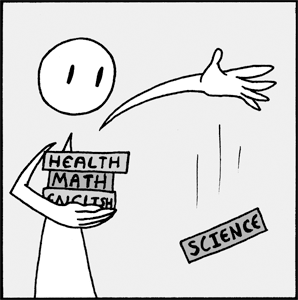
Dropping a class can be a humbling experience. First, there is a quiet acknowledgment you, as a student, must make with yourself that things are not going as planned. Then comes a verbal acknowledgment to your professor and advisor that you are potentially in over your head and will not be able to turn the situation around.
There is a level of self-awareness that you must possess to decide to step away from a class. Often, withdrawing from a class means you must retake it at some point in your academic career, especially if it is foundational to your major. It is better to reassess a class the next semester with a W rather than stubbornly clinging on and finishing with a D or worse—an F.
Samantha Linnell, an academic advisor at Wingate University, shared her thoughts on when it is appropriate for students to withdraw from classes.
“Some signs that a student should consider withdrawing from a class they are struggling in would be if they had a low midterm grade (D or F) or if they have not done well on exams, papers, or projects that are a large percentage of their final grade,” Linnell said. “We recommend that students always talk with their professor and their academic advisor before submitting the withdrawal form to make sure they are making a well-informed decision.”
Linnell makes it clear that by the time the withdrawal deadline arrives, if students are solidly failing a class, it might be time to consider reshaping their course load. Holding on to a class that is beyond recovery will only harm a student’s GPA and academic progress. If the course is essential to a major, it will likely need to be retaken unless a change in major is considered.
Dr. Candace Lapan, an associate professor of psychology at Wingate University, prefers to sit down with students and see exactly where they are struggling before advising them to withdraw.
“I usually reach out to students who have numerous absences and are missing substantial work,” Lapan said. “I may also discuss potential withdrawal if they are severely underperforming on exams. However, in my classes, I offer a variety of assessments, so performing below expectations does not necessarily mean that students have to withdraw. It is a complicated choice and I try to work with each individual student to assess their situation and see what will be best for them.”
Dr. Dawn Ray, an associate professor of mathematics at Wingate University, finds that self-motivated students are less likely to withdraw, even when struggling.
“Of course, early indications are test and quiz grades, but also what a student does if they receive a poor grade,” Ray said. “If a student proactively starts to attend office hours or seek out help from the ARC, I find they are more likely to successfully finish the course. However, students who do not do so usually slip further behind in their studies. By the time midterms are over, if a student has an average below 40, this is the time when I suggest that they consider withdrawing.”
Ultimately, a W on your transcript does not define you and there is no single path to success. College is a journey and setbacks are a natural part of that experience. Your transcript is only one piece of your academic story. Thoughtful, strategic decisions will lead to the best outcomes. Reevaluate your options, take a deep breath, and try again next semester.
 Wingate Triangle