
By Laron Warner
Triangle contributing writer
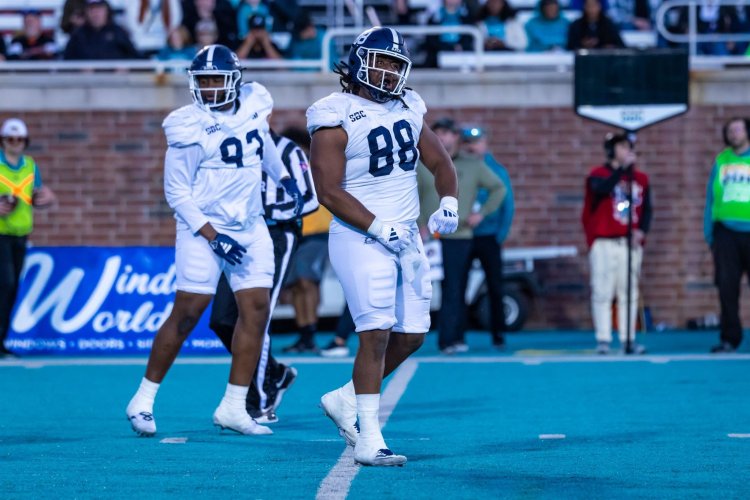
The NCAA transfer portal has changed the landscape of college athletics, offering athletes new opportunities to find the best fit for their skills and aspirations. Introduced in 2018, the portal was designed to highlight the transfer process, giving players a chance to seek new teams at various institutions. While the transfer portal has benefited many players, there are some downfalls that are being felt across college athletics, especially by players and coaches at programs outside of NCAA Division 1 like Wingate University.

For athletes, the portal represents freedom and opportunity. Former Wingate standouts like football players Justin Rhodes and Davon Gilmore and basketball star Josh Massey are prime recent examples of players whose outstanding performances at Wingate attracted Division 1 programs. All three athletes found new environments that better aligned with their goals and talents. But for the coaches and teammates left behind, the transfer portal is a double-edged sword, often leading to instability and the loss of valuable contributors.

For college coaches, managing a roster in this age of the transfer portal requires a delicate balance. The portal allows players to declare their intent to transfer and communicate with other programs openly, sometimes blindsiding coaches who rely on long term planning to2 build the best team.
Wingate head football coach Rashaan Jordan says the portal presents longtime coaches like himself with challenges they’ve never faced before.
“We understand players need to do what’s best for them and we fully support that, but it changes the dynamic having to replace and bring in new players that have to learn a new system,” Jordan said.

However, the portal has become a goldmine for talent but can get quite hectic as schools across the nation are vying for the top players.
For teammates, the transfer portal can be equally disruptive. When a key player announces their decision to transfer, it can affect team chemistry and morale.
“It’s hard losing someone you’ve bonded with throughout the years,” said Wingate wide receiver Carlos Estronza. “All the shared work and grind put in but at the same time you understand that everyone has to do what’s best for their career and you have no choice but to support your brother.”
For smaller programs like Wingate, the portal can be detrimental with standout players moving to larger programs. However, it can be beneficial to players that were backups having to step up and become a starter. For those incoming transfers it can grant opportunities for those who may not have found success at bigger schools but can thrive in a smaller, more supportive environment.
The stories of athletes such as Rhodes, Gilmore and Massey show how impactful the transfer portal can be for a college athlete’s career. Massey, a former Wingate basketball player entered the portal in search of greater exposure and competition. He landed at a Division I program where he became an instant starter and has been a key contributor for Stetson University.
After beginning his career at Western Carolina, the 6-6, 200-pound Massey spent his sophomore and junior years at Wingate, leading the Bulldogs to the NCAA Tournament last season as a first-team All-SAC forward who averaged 16.6 points and 5.9 rebounds per game.
Massey hasn’t skipped a beat since his move up to D1 Stetson, where he’s started every game for the Hatters since a Nov. 22 matchup with East Carolina. The Monroe native is averaging 11.6 points and a team-leading 5.0 rebounds per game for the Atlantic Sun Conference school in DeLand, Fla. Massey also leads Stetson in both field goal (.503) and free throw (.805) percentage.

“Transferring was one of the hardest decisions he ever had to make, but I knew I had to challenge myself at a higher level to reach my fullest potential,” Massey said.
Similarly, Rhodes made the most of his opportunities at Georgia Southern, breaking out as one of the best defensive linemen in the Sun Belt Conference over the last two seasons. The 6-1, 275-pound Durham, N.C., native started 21 of 24 games for the Eagles, recording 17 tackles for loss for a GSU team that won 14 games and played in consecutive bowls over those two seasons.
“The [transfer] portal gave me a second chance to prove to myself that I am one of the best in the country,” said Rhodes, who helped an 11-3 Wingate team get to the quarterfinals of the NCAA Playoffs in 2022. “Without it, I might not be where I am today.”

Rhodes and Gilmore made their move together to GSU after that highly successful 2022 campaign at Wingate, where Gilmore was a D2 All-American as a junior. Like Rhodes, Gilmore flourished during the move south to Statesboro, starting 13 of 26 games at linebacker and finishing second on the team with 62 tackles last year.
Massey, Rhodes and Gilmore’s success stories highlight the portal’s ability to elevate careers, giving players a fresh start and the chance to maximize their athletic potential.
The transfer portal has redesigned college athletics, granting players more control over their destinies. For many, it’s a tool to help them out of situations where they may feel underutilized, misaligned or stuck behind more experienced teammates. The portal also allows players to seek programs that better fit their academic goals or personal needs. For some, transferring is less about playing time and more about finding a supportive environment to balance sports, academics and personal growth.

Despite the benefits of the portal for players, it is not without risks. Entering your name doesn’t guarantee success. Thousands of athletes enter each year, and many fail to find new programs, leaving them in an awkward situation.
Wingate has one of the top overall athletic programs in Division 2 and regularly turns out some of the most talented student-athletes at this level. A product of that kind of success in the transfer-portal era is bigger schools recruiting your best players. Bulldog coaches have had to adapt to the changing landscape in their approach to building a program. While losing players like Rhodes, Gilmore and Massey was bittersweet, Wingate has also benefited from attracting D1 transfers looking for more playing time who bring valuable experience and skill from a higher level. It’s a second chance for such athletes who are eager to prove themselves.
“We’ve embraced the portal,” Jordan said. “But it’s not just about losing players, it’s about finding the right ones to bring in. Some of our best recent additions came through the portal.”
The transfer portal shows no signs of slowing down, and its long-term impact on college sports is still unfolding. For athletes, it remains a powerful tool for self-advocacy and career development. For coaches and teammates, it’s a challenge that requires adaptability and resilience.
 Wingate Triangle