
By: Ashley Stein and Maya Van Heyst
Triangle contributors
Wingate University is struggling to manage a pet-waste problem in the residential areas around campus.
Within the last two months, there have been an increasing number of complaints related to dog waste, especially outside of South Village where most of the juniors and seniors reside.
Residence Director Sissi Pacheco has sent out countless emails addressing the issue, reminding pet owners to clean up after their animals. As the weather has warmed up, more students are spending time outside in the affected areas without knowing about the potential “landmines” of poop waiting for them on the ground.
Maddie Gagnon, a senior exercise science major from Mars, Pa., is one of the most recent victims.
“My friends and I have started calling the yard in front of Bridges Hall the “[poop]yard,” she said. “Some individuals will be tanning in this area completely clueless as to how disgusting and gross it is.”
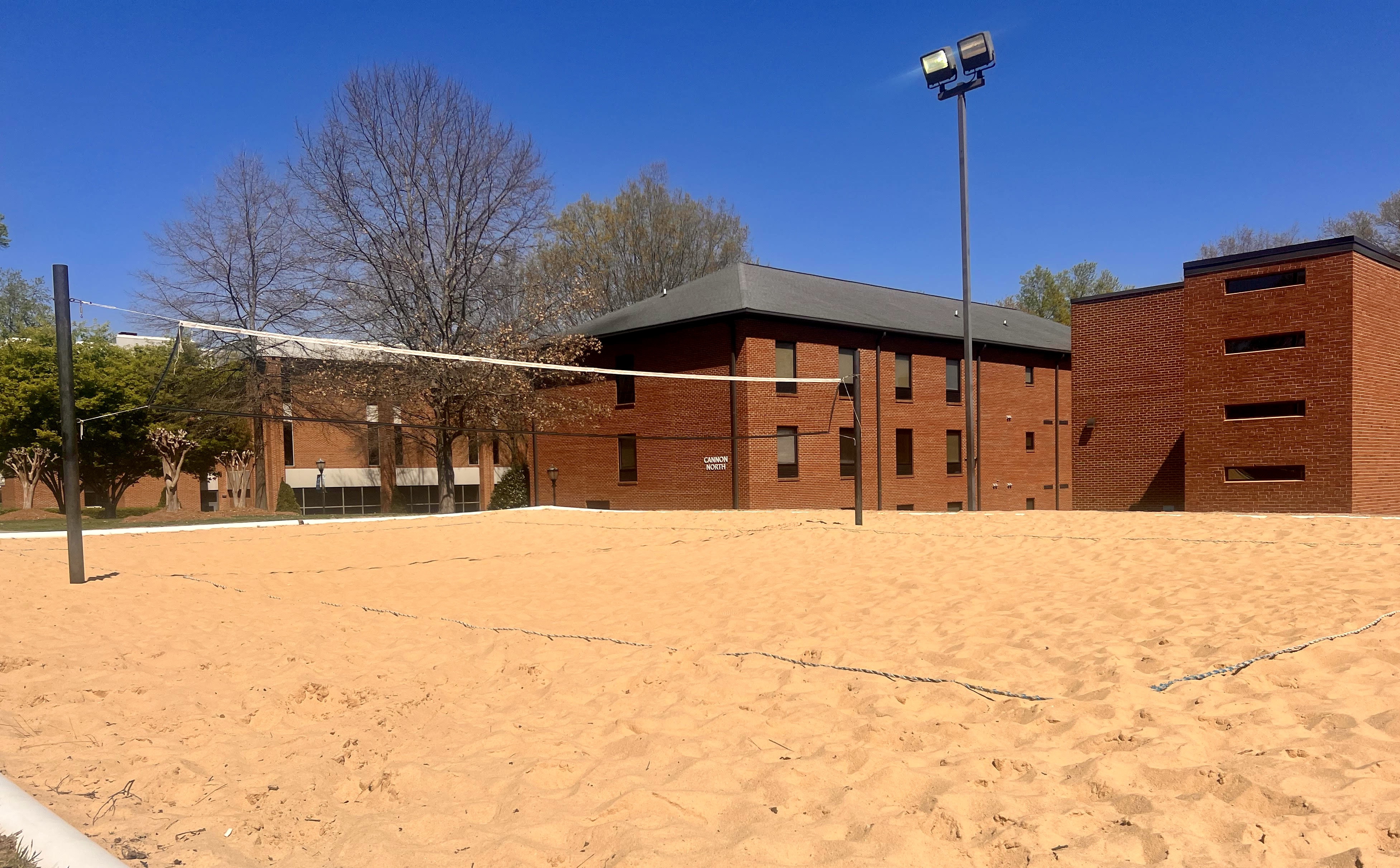
South Village is also home to the campus pool and outdoor volleyball courts, which pets are sometimes mistaking as a very large litter box. Many students can be seen playing volleyball for hours as soon as it starts warming up outside, alternating between the pool and playing volleyball. Gabby Saye, a sophomore marketing major from Edwardsville, Ill., says she has video evidence of a number of cats using the beach volleyball court as a litter box.
“I love playing [volleyball] outside with friends, but that’s disgusting,” senior psychology major Emani Davis said after seeing the videos. “If I ever play again I will be wearing sneakers.”
Katie Jameson, a junior health/physical education major from Matthews, said: “There has to be some protocol for cleaning the courts.”
When walking around the Wingate campus, one might think that it’s very dog-friendly due to the high number of pets, most of which are registered through the school as service animals or emotional support animals. But there often is confusion when it comes to distinguishing the two designations. Service animals are defined as an animal that is specifically trained to help individuals with a disability. An emotional support animal helps to relieve psychiatric disabilities through companionship.
All dogs on Wingate’s campus are supposed to be registered as either emotional support or a service animals. However, that doesn’t mean there aren’t other animals staying on campus that are here illegally.
The process to get an animal approved on campus involves lots of extensive paperwork that can be time-consuming. Doctor documentation is also needed to get a pet approved to live on campus, which can be expensive and also why some individuals choose not to go through the approval process.
The Office of Residence Life has tried to control the issue by reminding registered pet owners to clean up after their animals, but it hasn’t seemed to produce any change, according to the residents of South Village.
“We can inform the registered owners and still not be targeting the culprit of this issue due to the high number of illegal pets living in the area,” Pacheco said.
 Wingate Triangle